About School
The Third International School for Students and Young Scientists 'Quaternions, Geometric Algebras, and Applications' is organized by the Laboratory for Geometric Algebra and Applications (HSE University, Moscow) in collaboration with the international research laboratory 'Multiscale Mathematical Modeling and Computer Calculations' (North-Eastern Federal University, Yakutsk) as part of the project Mirror Laboratories: 'Quaternions, Geometric Algebras, and Applications'.
Dates: November 13–15, 2026.
Format: Online.
Working language: English.
Topics of School
- Quaternions, split-quaternions, biquaternions, commutative quaternions, octonions, hypercomplex numbers;
- Geometric algebras, Clifford and Grassmann algebras, generalized Clifford algebras;
- Spin groups and other Lie groups within the Clifford algebra formalism;
-
Spinors and the Dirac equation in field theory and physics;
- Applications of geometric algebras in neural networks;
- Applications of geometric algebras and quaternions in signal and image processing;
- Other applications in computer science, engineering, and physics.
Format of Sessions
The School's program will include lectures and presentations designed to help participants master the theoretical foundations and modern approaches to applying the theory. The schedule includes 4-5 hours of lectures and talks daily.
Participants are welcome to present their own scientific reports on the School's topics. Applications, including the title and a short abstract, are to be submitted during registration.
Target Audience
The School is intended for students, graduate students, and young scientists interested in mathematics, physics, computer science, and related fields. No prior deep knowledge of quaternions and geometric algebra is required, as all necessary concepts will be introduced during the sessions. A background in linear algebra at the level of a standard university curriculum is sufficient.
Keynote Speakers
(in alphabetical order)

Department of Mathematics, University of Macau (Macau, China)
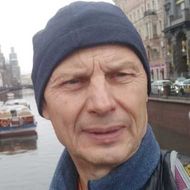
Department of Mathematical Physics at Steklov Mathematical Institute of RAS and Laboratory for Geometric Algebra and Applications at HSE University (Moscow, Russia)

Bahamas Advanced Science Institute and Conferences (Long Island, Bahamas), Quantum Gravity Research (Los Angeles, USA)

Professor Emeritus, Universidad de las Américas Puebla (Puebla, Mexico)
Speakers
(in alphabetical order)
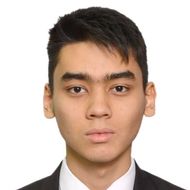
Laboratory for Geometric Algebra and Applications, HSE University (Moscow, Russia)

National Autonomous University of Mexico (Mexico)
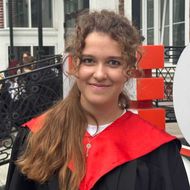
Department of Mathematics, Laboratory for Geometric Algebra and Applications, HSE University (Moscow, Russia)

School of Mathematics and Systems Science, Liaocheng University (Liaocheng, China); NEFU (Yakutsk, Russia); Univeristy of Manitoba (Winnipeg, Canada)

Laboratory for Geometric Algebra and Applications, HSE University (Moscow, Russia)

Florida, USA

School of Mathematical Sciences, Qufu Normal University (Qufu, China); NEFU (Yakutsk, Russia)

School of Statistics and Data Science, Qufu Normal University (Qufu, China); NEFU (Yakutsk, Russia)
Programme
Time is indicated in Moscow Time (MSK).
- November 13 (Friday)
- November 14 (Saturday)
- November 15 (Sunday)
-
09:00-10:00 — Gauge Invariant Generalizations of the Proca Equation and the Yang-Mills-Proca Equation
Speaker: Nikolay Marchuk (Steklov Mathematical Institute of RAS; HSE University, Moscow, Russia)
Language: Russian
Abstract: The Proca equations (1936) are used in quantum field theory to describe vector bosons (spin 1) with a nonzero mass. The Proca equations are not gauge invariant. In contrast to Stueckelberg's approach (1938), this article presents a gauge invariant generalization of the Proca equation by introducing an additional vector field into the Proca equation. The results are extended to the Yang-Mills-Proca equations, leading to equations with non-Abelian gauge symmetry.
-
10:00-11:00 (23:00-24:00, November 12, California time) — N-ary anticommutators and Generalized Clifford Algebras in Finsler and Spectral Geometry
Speaker: Carlos Castro Perelman (Bahamas Advanced Science Institute and Conferences, Long Island, Bahamas; Quantum Gravity Research, Los Angeles, USA)
Abstract: It is shown that a careful study of the simplest family of generalized Clifford algebras (GCAs) associated with the N-th root of unity in D-dimensions leads to the following generalized anti-commutator with N entries { e_{i_1}, e_{i_2}, e_{ i_3}, \ldots, e_{ i_N} } = N! \eta_{ i_1 i_2 \ldots i_N } e, where e is the unit element and all the N ! terms of the permutations appear with the same positive sign. The components of the rank-N metric are \eta_{ i_1 i_2 \ldots i_N } = 1, iff i_1 = i_2 = i_3 .... = i_ N , and 0 otherwise. A generalized Finsler-like arc-length based on the rank-N metric g_{\mu_1 \mu_2 \ldots \mu_N} is studied. The construction of different expressions for the Dirac operators associated with the Generalized Clifford Spaces corresponding to these GCA's follows. Dirac operators are essential in the study of Spectral Geometry in Noncommutative Geometry. We finalize by displaying the relation among GCAs and the algebras underlying the Noncommutative fuzzy torus and discuss applications in condensed matter and quantum groups. We conclude with some remarks on N-ary algebras and their applications in Mathematics and Physics.
-
11:00-12:00 — Break
-
12:00-12:40 — Generalized Conjugate Spinors in the Dirac and Dirac-Hestenes Formalisms
Speaker: Sofiia Rumiantseva (HSE University, Moscow, Russia)
Abstract: Conjugate spinors are needed to construct the bilinear covariants, which describe the physical observables of a spinor field. Conversely, by the Takahashi reconstruction theorem, a set of bilinear covariants satisfying the Fierz identities determines the spinor up to a phase. However, the classical Dirac adjoint does not apply to all spinor fields. For example, it is not suitable for ELKO spinors, which have been proposed as a description of dark matter fermions. In this talk, we discuss a generalized conjugate spinor that contains both the Dirac adjoint and the ELKO dual as particular cases. We then transfer this construction to Dirac-Hestenes spinors, which are solutions of the Dirac-Hestenes equation, a real analogue of the Dirac equation in geometric algebra.
-
12:40-13:20 (17:40-18:20 Qufu time) — Efficient Algorithms for the Decomposition of Skew-Hermitian and η-Hermitian Quaternion Matrices
Speaker: Gang Wang (Qufu Normal University, Qufu, China; NEFU, Yakutsk, Russia)
Abstract: The practical session will focus on structure-preserving decompositions of quaternion matrices. The programme includes the spectral decomposition of skew-Hermitian quaternion matrices, the Autonne–Takagi decomposition for ηη-Hermitian matrices, and algorithms for computing canonical diagonal forms that ensure numerical stability and account for the noncommutativity of quaternion algebra.
-
13:20-14:00 (18:20-19:00 Liaocheng time) — Efficient Eigenvalue Computation for Skew-Hermitian Quaternion Matrices with an Application to Color Image Edge Detection
Speaker: Zhenwei Guo (Liaocheng University, Liaocheng, China; NEFU Yakutsk, Russia; Univeristy of Manitoba, Winnipeg, Canada)
Abstract: This talk presents an efficient eigenvalue method for skew-Hermitian quaternion matrices. Using a structured complex representation, the quaternion eigenvalue problem is transformed into a complex eigenvalue problem, from which the quaternion eigenvalues and eigenvectors can be recovered. An efficient strategy for computing the largest-modulus eigenvalue is also discussed. The proposed method is further applied to color image edge detection, where local RGB information is represented by skew-Hermitian quaternion matrices and the largest-modulus eigenvalue is used as an edge response. Numerical experiments demonstrate the accuracy of the proposed algorithm and its effectiveness in extracting color image edges.
-
16:00-17:00 (8:00-9:00 Clemson time) — The Universal Null Substrate: Emergence of Spacetime and Quantum Algebras
Speaker: Garret Sobczyk (Universidad de las Américas Puebla, Puebla, Mexico)
Abstract: We present a purely algebraic, matrix-free foundation for spacetime, conformal, and quantum geometric algebras emerging from a Universal Null Substrate (UNS). Starting from primitive null vectors governed solely by n² = 0 and linearity, the inner product n₁ · n₂ := ½(n₁n₂ + n₂n₁) emerges directly from expanding the square (n₁ + n₂)². Introducing dual four-dimensional null substrates V_c and V_w with c_i · c_j = ½ and w_i · w_j = −½ (i ≠ j) defines the Quadratic Space of Null Vectors (QSNV), yielding the orthonormal Hadamard bases {e₁, f₁, f₂, f₃} of the spacetime algebra G(1, 3) and {f₁, e₁, e₂, e₃} of the Majorana algebra G(3, 1). Bridging V_c and V_w via c_i · w_j = δ_ij embeds the conformal spacetime algebras G(2, 4) and G(4, 2) inside the full phase space G(4, 4) = G(1, 3) ⊕⊥ G(3, 1), naturally accounting for the conformal group O(2, 4), Dirac’s six-cone, the Pauli algebra G(3, 0), and Penrose twistors without recourse to matrix representations.
-
17:00-17:40 (9:00-9:40 Florida time) — TBA
Speaker: Kristin Tynski (Florida, USA)
Abstract: TBA
-
17:40-18:20 (8:40-9:20 Mexico City time) — A Graded Algebra Approach for an Algebra of Observers
Speaker: Jose de Jesus Cruz Guzman (National Autonomous University of Mexico, Mexico)
Abstract: The aims of this work is to present a review of different approach to the Interaction concept, appeared in different stages of the physical science, and the relation with the observer concept. We explore Newton, Leibniz, Truesdell, Einstein, Borh, Yang and Lawvere view point and we present a categorical formalization of the interaction concept and develop an observer algebra based on a graded $\mathcal{F}$-albebra of the interaction category. Finally some applications to physics are discussed.
-
11:00-12:00 (16:00-17:00 Macau time) — Hypercomplex Analytic Signal Theory and Applications
Speaker: Kit Ian Kou (University of Macau, Macau, China)
Abstract: The analytic signal — a real signal paired with its Hilbert transform — underpins envelope detection and instantaneous phase and frequency estimation. For multicomponent and multidimensional data, the scalar construction is insufficient, and hypercomplex algebras provide a natural generalization. This lecture surveys analytic signal theory in quaternion and Clifford algebras, covering the construction of hypercomplex analytic signals, Bedrosian-type identities and mono-component decomposition, the role of noncommutativity in transform-side selection, and applications to envelope and instantaneous-frequency estimation, local phase-based feature extraction, and filtering in the hypercomplex analytic domain.
-
12:00-12:40 — Equivariant Neural Networks Based on Geometric Algebras
Speaker: Ekaterina Filimoshina (HSE University, Moscow, Russia)
Abstract: Many physical systems across science and engineering behave the same way even if you rotate or mirror them. Equivariant neural networks are a special class of deep learning models designed to recognize and preserve these kinds of symmetries in data. This talk will present a new, efficient method for constructing neural networks equivariant with respect to pseudo-orthogonal (or complex orthogonal) groups, using the framework of geometric (Clifford) algebras. The approach is based on the well-known connection between the Lipschitz groups in these algebras and pseudo-orthogonal groups: any pseudo-orthogonal transformation of vectors can be realized by a twisted adjoint action of some element of the Lipschitz group. The transition from the matrix formalism to the formalism of geometric algebras allows us to expand the set of operations for constructing equivariant layers and obtain a new geometric interpretation.
-
12:40-13:40 — Break
-
13:40-14:20 — Constructing Inverse and Determinant Formulas in Geometric Algebras over Odd-dimensional Vector Spaces
Speaker: Kamron Abdulkhaev (HSE University, Moscow, Russia)
Abstract: In this talk, we will present, explicit formulas for the inverse and determinant in the geometric algebra over seven-dimensional vector spaces. We generalize the concept of Clifford conjugation and provide a systematic way to construct these formulas for odd-dimensional cases from known results from even-dimensional. We will demonstrate the computational utility of our approach and discuss how these formulas extend previous results.
-
14:20-15:00 (19:20-20:00 Qufu time) — Adaptive Tensor-Train Approximation over Commutative Quaternions
Speaker: Dong Zhang (Qufu Normal University, Qufu, China; NEFU, Yakutsk, Russia)
Abstract: This talk introduces tensor-train approximation over the commutative quaternion algebra, starting with basic ideas from low-rank matrix approximation and tensor decompositions. The algebra splits into two complex components, whose ranks can be chosen jointly under a shared budget. We explain an adaptive allocation rule based on the two singular-value spectra and present its local optimality, exact error identity, and tensor-level quasi-optimality bound. For color images, a norm-preserving principal-color embedding combines a real component with a complex component. Numerical examples illustrate the benefits and limitations of this approach under nominal-rank and storage constraints, including an application to image restoration.
Registration
To participate in the International School for Students and Young Scientists 'Quaternions, Geometric Algebras and Applications', please register using the link below.
Local Organizers
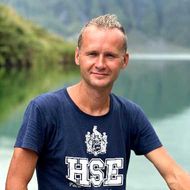
Head of Laboratory for Geometric Algebra and Applications, Professor of Department of Mathematics, HSE University (Moscow, Russia)
Laboratory for Geometric Algebra and Applications, HSE University (Moscow, Russia)
Laboratory for Geometric Algebra and Applications, Department of Mathematics, HSE University (Moscow, Russia)
Q&A
To join, you need to complete the registration process. All organizational information, including the link to the broadcast, will be sent to registered participants. School participants are welcome to present their talks related to the event's themes. Presentation proposals (title and short abstract) should be submitted during registration.
Yes, absolutely! Our speakers will cover all necessary fundamentals during their presentations. The School is designed to be useful and accessible for participants with different background levels.
Yes. If you require a School participation certificate, please contact the organizers at gaa.lab.hse@gmail.com after the completion of all program events.
Yes. After the School concludes, video recordings of the presentations will be sent to all registered participants.
We'll be happy to answer all your questions! Please email us at gaa.lab.hse@gmail.com.
