• A
  • A
  • A
  • ABC
  • ABC
  • ABC
  • А
  • А
  • А
  • А
  • А
Regular version of the site
Contacts

109028, Moscow,
Pokrovsky Boulevard 11, Rooms: S1029, S1030
Phone: +7 (495) 772-95-90*27172, 27174, 27601, 28270 

Department Administration
Department Head Alexander Tarasov

PhD, Penn State University

Deputy Head Svetlana Seregina
Senior Administrator Elizaveta Volodina
Senior Administrator Natalia Baibouzenko
Administrator Marina Yudina
Article
Modern Monetary Theory: The Bolshevik experiment

Nenovsky N., Dowd K.

Economic Affairs. 2026. Vol. 46. No. 1. P. 76-98.

Book chapter
Unholy Alliance. Socialism and the Market in Soviet Economic Discourse

Ananyin O. I., Melnik D.

In bk.: Reforming Communism, Refusing Capitalism. The Rise and Fall of the Concept of "Socialist Market". L.: Bloomsbury Academic, 2026. P. 323-360.

Working paper
Cyclical Fluctuations, Financial Frictions, and Productivity Differences across Firms

Mishin A., Guerrieri L., Kim J.

Finance and Economics Discussion Series (FEDS). 2026-042. the Board of Governors of the Federal Reserve System, 2026

Tag "international cooperation" – News

Fair Division: How Mathematics Helps to Divide the Indivisible

Fair Division: How Mathematics Helps to Divide the Indivisible
How can items be allocated among participants so that no one feels short-changed? Alexander Karpov, Assistant Professor at the Faculty of Economic Sciences, and his Singaporean colleague, Prof. Warut Suksompong, set out to find a mathematical answer to this question. In this interview, they discuss how a model of rational preferences is constructed, why one cannot rely on a simple sum of values, and where an algorithm that asks a minimal number of questions can be useful.

Welcome aboard!

Welcome aboard!
The Faculty of Economic Sciences is pleased to welcome back James Tremewan, Associate Professor in the Department of Theoretical Economics, hired by the faculty under HSE University international recruitment procedure.

Welcome aboard!

Welcome aboard!
Faculty of Economic Sciences is proud to welcome Dr. Sergei Mikhalishchev, hired by the faculty under HSE University international recruitment procedure.

Zaruhi Hakobyan Shortlisted for HSE Alumni Awards

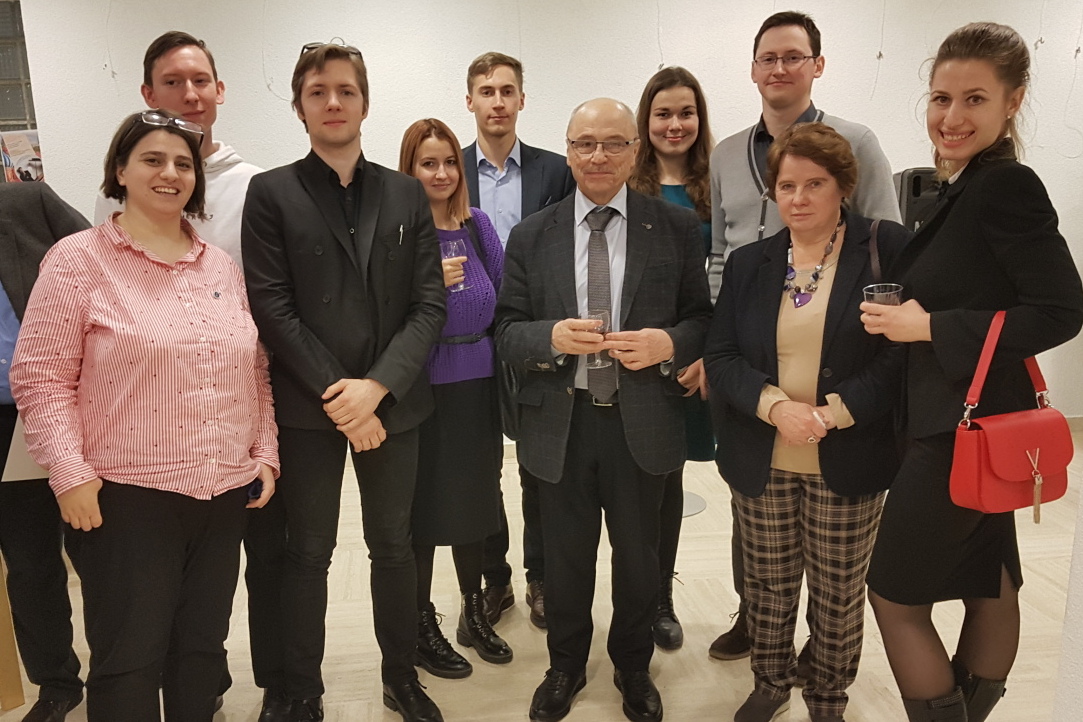
Zaruhi Hakobyan (left) and Grigory Kantorovich with HSE University graduates at the Russian Centre for Culture and Science in Luxembourg
Zaruhi Hakobyan, master’s graduate of the HSE University Faculty of Economic Sciences and research scientist at the University of Luxembourg, is involved not only in research but also in organising academic events for young scientists and students. As a foreign graduate of HSE University, Zaruhi was nominated for the HSE Alumni Awards ‘for her tireless enthusiasm in popularising economic science, teaching, and research at the international level’ and made the shortlist.

Welcome aboard!

Welcome aboard!
Faculty of Economic Sciences is proud to welcome Dr. Soubhagya Sahoo, new Assistant Professor of the Department of Theoretical Economics, hired by the faculty under HSE University international recruitment procedure.

Nargiz Mammadova: ‘HSE Paved My Road to Harvard‘

Nargiz Mammadova: ‘HSE Paved My Road to Harvard‘

Welcome aboard!

Welcome aboard!
Faculty of Economic Sciences is proud to welcome Dr. Behrang Kamali, new Assistant Professor of the Department of Theoretical Economics, hired by the faculty under HSE University international recruitment procedure.

HSE Faculty of Economic Sciences Co-Authors Intercontinental Monograph

HSE Faculty of Economic Sciences Co-Authors Intercontinental Monograph
The monograph Russian and Western Economic Thought has been published under the editorship of the HSE Faculty of Economic Sciences and the University of Hohenheim, Stuttgart (Germany). Written by a selection of respected experts, the monograph examines the interrelations and mutual influence of Russian and Western economic thinking. The book is edited by Prof. Vladimir Avtonomov, HSE Faculty of Economic Sciences, and Prof. Harald Hagemann, the University of Hohenheim.

Bad Roads Reduce Trade Volumes by 18%

Bad Roads Reduce Trade Volumes by 18%
Economists from HSE University and the Vienna University of Economics and Business have figured out why, all else equal, trading goods across borders can be more expensive than trading the same goods within state borders. They argue that one of the reasons is underdeveloped infrastructure in border regions. Their study was published in the Journal of Urban Economics.