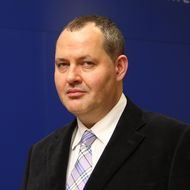
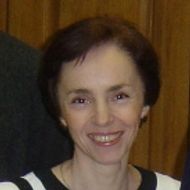
Over the next 20 years, death rates among working age Russian men are expected to drop by a third due to a change in alcohol consumption preferences – namely, the decreasing popularity of vodka, according to Yevgeny Yakovlev, Assistant Professor at the HSE Department of Applied Economics, and Lorenz Kueng, Assistant Professor of Finance at the Kellogg School of Management at Northwestern University.
Even a business climate that is not very favourable is not an obstacle for investors if the country is developing fast in general. Business leaders who invest in countries with underdeveloped institutions choose politically stable regions with high demand, qualified workforce and developed infrastructure, said Ksenia Gonchar, leading research fellow at the HSE Institute for Industrial and Market Studies (IIMS), in a paper.
HSE Professors Anna Yurko and Fabian Slonimczyk have received the prestigious Gaidar Award for young economists. Their research, titled 'Assessing the Impact of the Maternity Capital Policy in Russia,' was published in the respected journal Labour Economics , the official publication of the European Association of Labour Economists. Our researchers used mathematical models to assess the impact of maternity capital policy on the birthrate in Russia.
The Russian labour market is very mobile. People change jobs often, exiting the labour market only to enter it again. Those who are temporarily out of work do not manage to become officially unemployed since such a move would make no economic sense. Around a third of all unemployed Russians are outside of the governmental and statistical realm, according to the Director of HSE’s Centre for Labour Market Studies, Vladimir Gimpelson, and a Junior Research Fellow in the Centre, Anna Sharunina.
Generally, Russian businesses are fairly resistant to external shocks. Many enterprises have not only survived the 2008 crisis, but have increased their market share since then. Major companies with foreign owners and those investing in restructuring and modernisation have a better chance of success, according to Boris Kuznetsov, Professor at the Department of Economic Analysis of Organizations and Markets and co-author of the study 'The impact of industrial strategies on resilience to external shocks and on the post-crisis development trends'.
Poverty in Russia is particularly difficult to overcome since it is very heterogeneous. The Russian poor include groups as diverse as villagers who do not seem to fit into the post-industrial environment, low-skilled workers, university professors, and parents of young children. Each category of the poor requires a separate approach and a different type of state support, according to HSE Professor Nataliya Tikhonova and Associate Professor at the Faculty of Economics, Vasiliy Anikin.
Most Russian company owners invest in the continuing education of their employees, but not all of them. The lucky ones are 10-20% of all staff. Such spending looks risky even though the return on it is high. Continuing education increases salary by 8% on average, which is an indirect sign of the same improvement in the labour productivity of the educated staff, Pavel Travkin, Junior Research Fellow at the HSE Laboratory for Labour Market Studies, found.
1
2
3
4
5
6
7
8
9
10
11
12