• A
  • A
  • A
  • ABC
  • ABC
  • ABC
  • А
  • А
  • А
  • А
  • А
Regular version of the site

Research & Expertise

When Risks Are Too High: The International Centre of Decision Choice and Analysis on the Outcomes of Its Work

When Risks Are Too High: The International Centre of Decision Choice and Analysis on the Outcomes of Its Work
In the more than 10 years since it was established, the HSE International Centre of Decision Choice and Analysis has travelled a long way from a laboratory to an academic centre of gravity for globally renowned scholars.Fuad Aleskerov, Professor in the HSE Faculty of Economic Sciences and Director of the HSE International Centre of Decision Choice and Analysis, spoke about the evolution of the centre’s team, its research activity, and solving Arctic dilemmas through the use of mathematical models.

Lockdown by Algorithm: A Proposed Model Calculates Optimal Restriction Levels

Lockdown by Algorithm: A Proposed Model Calculates Optimal Restriction Levels
During the pandemic, countries have endeavoured to protect their citizens without hurting their economies with excessive restrictions. At the seminar ‘Living with Covid-19: Optimal Lockdown Policies’, Hubert Kempf, academic supervisor of HSE University’s International Laboratory for Macroeconomic Analysis, presented a mathematical model that can be used to calculate the optimal level of restrictions.  

Researchers Find a Connection Between Trump’s Tweets and the Exchange Rate of the Rouble

Researchers Find a Connection Between Trump’s Tweets and the Exchange Rate of the Rouble
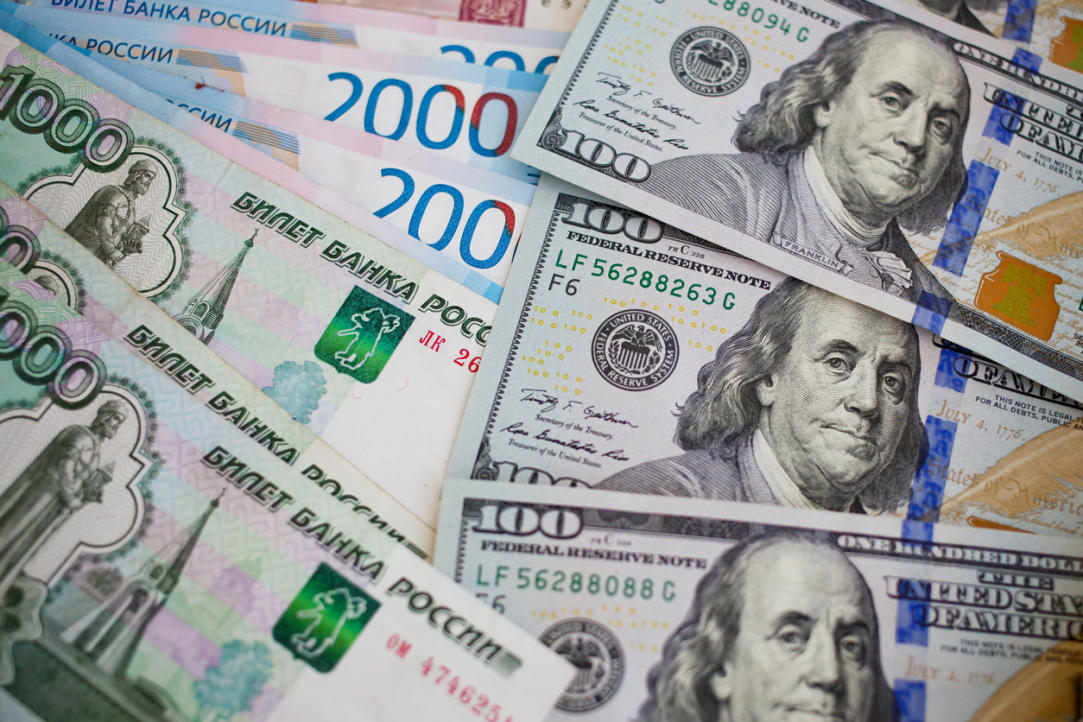
Tweets about Russia by Donald Trump during his presidency caused short but noticeable depreciations of the rouble. Meanwhile, the introduction of new sanctions, upon which the president did not comment, had no such effect. This was the finding of a group of researchers, which included Elena Fedorova, Professor of the Faculty of Economic Sciences of HSE University. The group published their findings in in the Journal of Economic Behavior and Organization.

Why Women in Russia Earn Less Than Men

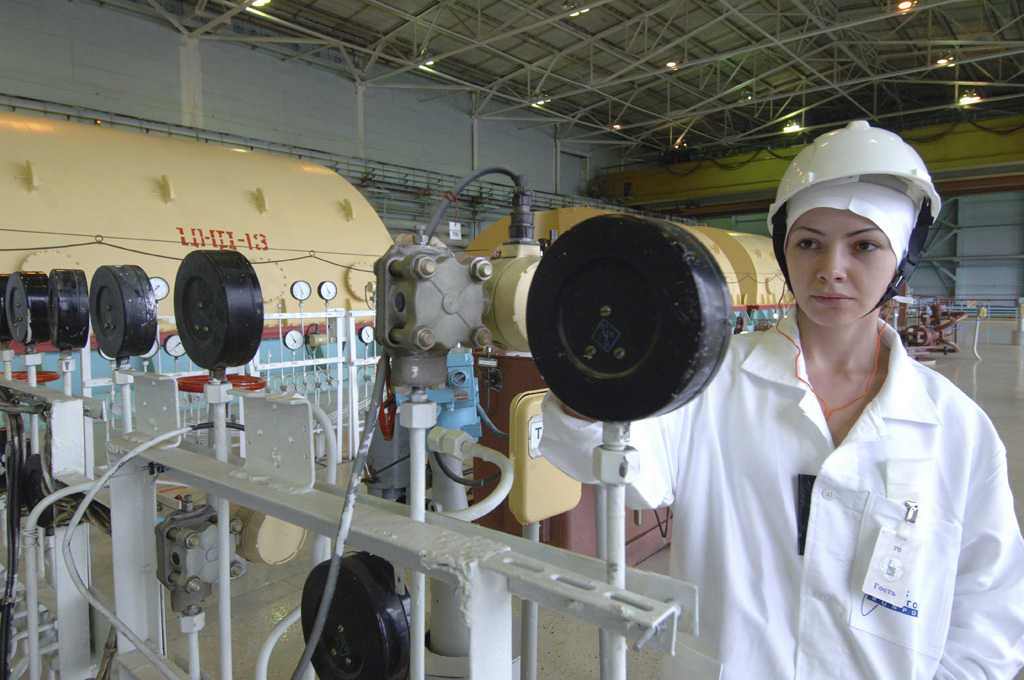
Employees of the Kursk nuclear power plant
On average, women in Russia earn 30-35% less than men. According to this indicator, Russia is ahead of many developed countries. The difference in earnings is primarily associated with the uneven distribution of men and women in different industries and professions, but economists cannot explain a significant portion of the discrepancy. Aleksey Oshchepkov, Assistant Professor of the Faculty of Economic Sciences at HSE University, came to these conclusions after analyzing research materials and survey data. The results are published in a chapter of the volume, Gendering Post-Soviet Space, recently published by Springer.

The Impact of Commodity Prices on Endorsement of Leadership Change in Resource-rich Countries

The Impact of Commodity Prices on Endorsement of Leadership Change in Resource-rich Countries
Economics undergraduate program junior student Kira Silvestrovich's research paper won 3rd prize in Student research papers competition 2020. Here we publish paper synopsis

Nearly 2,000 Papers, 23 Nominations, and 165 Winners in 2020 Student Research Paper Competition

Nearly 2,000 Papers, 23 Nominations, and 165 Winners in 2020 Student Research Paper Competition
The annual awards ceremony of the Student Research Paper Competition (NIRS) was held on February 8, Russian Science Day. This year, 165 people received awards, including not only HSE students but also contestants from Saint Petersburg State University, Moscow State University, Far Eastern Federal University, Mount Holyoke College (USA), and other universities. Another 160 participants became laureates of the competition, with 1,924 papers submitted in total.

HSE University and Consortium Partners Aim to Take Human Capital Studies to New Level

HSE University and Consortium Partners Aim to Take Human Capital Studies to New Level
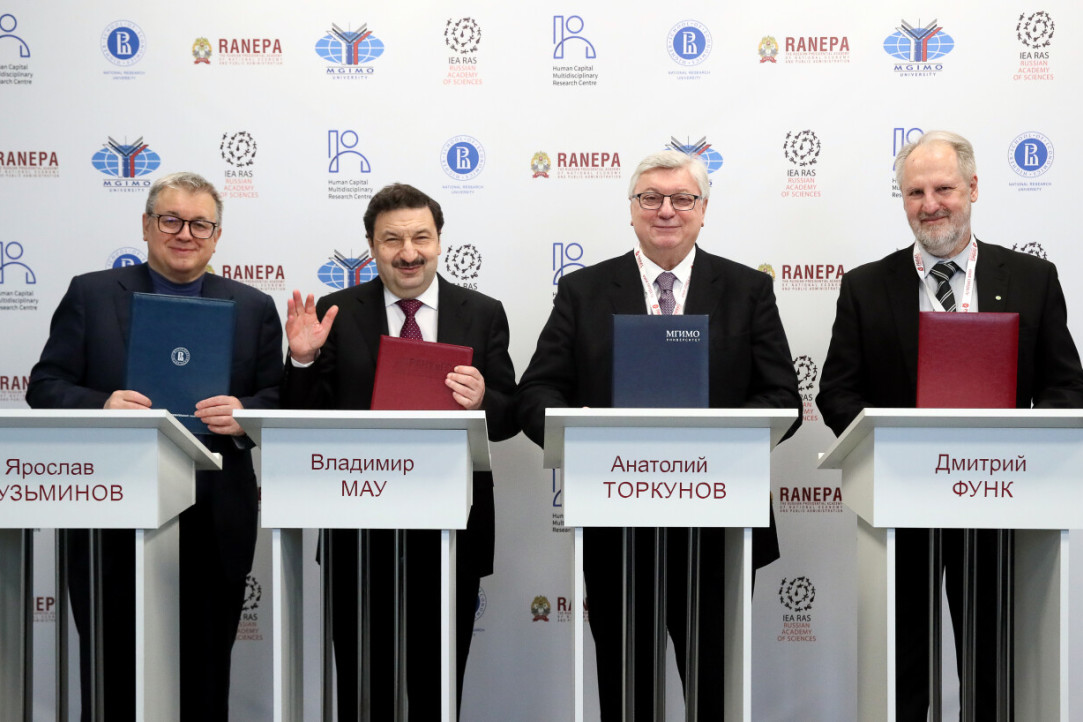
On January 14, at the 2021 Gaidar Forum, which was held at the Russian Presidential Academy of National Economy and Public Administration (RANEPA), HSE University Rector Yaroslav Kuzminov and leaders of three other institutions signed an agreement to establish the Human Capital Multidisciplinary Research Center (HCMRC). The other co-signers were RANEPA Rector Vladimir Mau, MGIMO University Rector Anatoly Torkunov, and Dmitry Funk, Director of the N.N. Miklukho-Maclay Institute of Ethnology and Anthropology of the Russian Academy of Sciences. The Center will focus on that key areas of human capital studies that are of current global importance.

Competing Benefits: Economic Theory and COVID Constraints

Competing Benefits: Economic Theory and COVID Constraints
Those who consider themselves healthy will be more willing to comply with COVID restrictions if they believe, according to their own estimations, that the expected losses from the disease will be significant, suggest researchers of the Faculty of Economic Sciences at HSE University.

Negative Reviews Boost Sales

Negative Reviews Boost Sales
Aleksei Smirnov, Assistant Professor, HSE University Faculty of Economic Sciences, and Egor Starkov, Assistant Professor, University of Copenhagen, have constructed a mathematical model that explains why it is advantageous for sellers not to delete negative reviews of their products. A study detailing this conclusion has been accepted for publication in The American Economic Journal: Microeconomics.

HSE University Ranks 115th in RePEc World Ranking

HSE University Ranks 115th in RePEc World Ranking
The RePEc rating (Research Papers in Economics) is based on publication activity data in the field of economics and related disciplines. In recent years, HSE University has consistently ranked first among Russian universities, and it continues to steadily climb the global ranking, overtaking well-known, centuries-old foreign universities. In the latest European ranking, HSE University took 46th place. In the world ranking, the university has ranked 115th (an increase of 4 places in the space of one month).